Why Burnout in Community Management Is a Structural Problem
Care work is under structural pressure, and the exhaustion that comes with it is not a personal failing. That was the throughline of Carrie Melissa Jones' keynote at All Things in Moderation 2026, where the overarching theme was CARE.
Jones’, who runs the CMJ Group, has worked in community for decades, and is one of the most respected voices in community practice globally.
Here are some of the key insights she shared for digital front line workers.

“You are having a very rational response to an absolutely irrational and inhumane situation.” [Image: Unsplash]
Care work has three components that cannot be automated
Jones broke community and moderation labour into emotional labour (listening, witnessing, regulating), relational labour (navigating difference and conflict between people) and organisational labour (planning, resourcing, sustaining structures). None of it is glamorous.
All of it is currently being cut, relabelled as inefficiency, or handed to AI tools that cannot effectively do it.
Your exhaustion is a rational response
"You are having a very rational response to an absolutely irrational and inhumane situation."
Practitioners under pressure to move faster, adopt new tools before understanding them, and absorb narratives that they'll be ‘left behind’ if they don't, are responding sanely to an unreasonable set of demands. That's worth naming to yourself and your team.
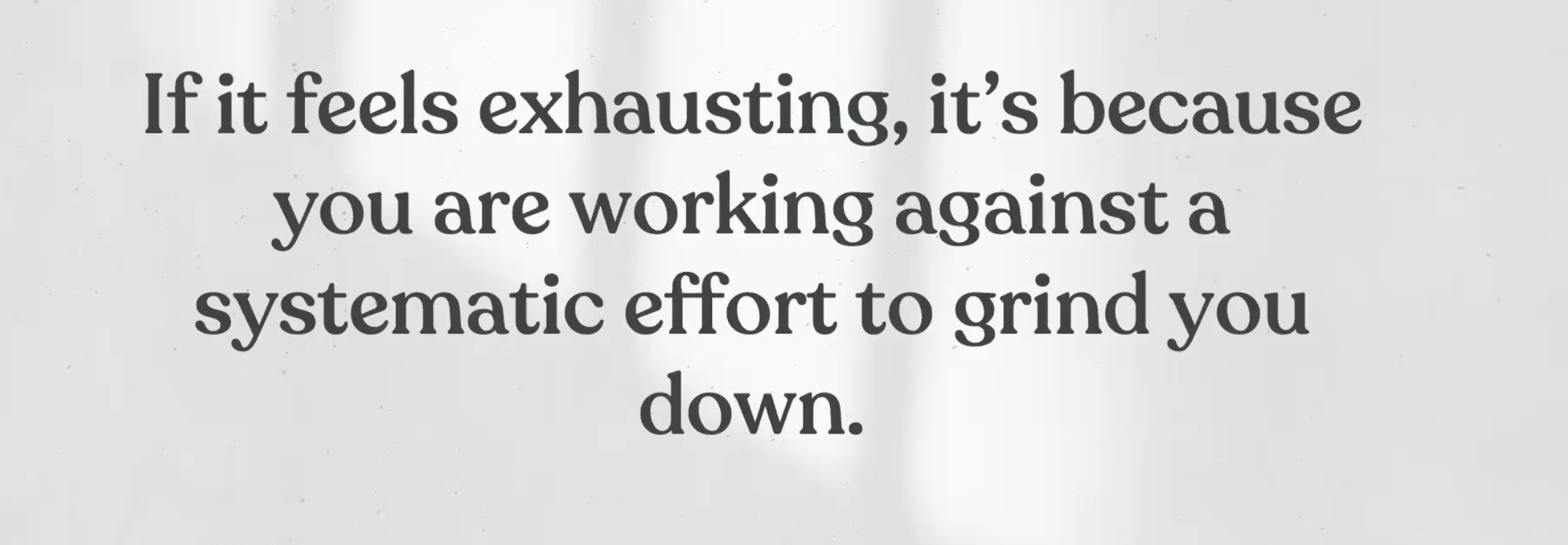
If it feels exhausting, it’s because you are working against a systematic effort to bring you down.
Time & space are structural choices (not personal ones)
The pressure that you likely feel to work faster and harder right now is a structural choice (not a personal problem). Jones argued that protecting time and space for care work, both within a job and outside it, is essential to the work of community building and moderation (and sometimes, an act of resistance). This includes advocating for the physical and digital spaces care work needs to happen safely and well.
Scale comes from distributed ownership
A direct challenge to a common assumption: AI does not let communities scale by making individuals faster. Care and community scales through distributed leadership and ownership across more people, so the work doesn't collapse when one person burns out or leaves. Reciprocal labour, work that goes both ways and isn't dependent on a single person, is what makes care resilient rather than brittle.
Three small, practical commitments
Jones closed with concrete, low-cost actions any practitioner can take up immediately:
Build out a standing personal (IRL) gathering, about something other than your core work or job (e.g. a neighbourhood meetup). Same time, same rough format, every month, no professional network required and, ideally, no talk of work.
Protect one restorative activity for yourself, weekly. Not occasionally, not when things calm down: every single week, treated with the same non-negotiable status as any other important commitment.
Identify an advocate in the lineage of your work, someone who helped shape or support you getting to where you are (a mentor, an early influence, even a relative). Find something that reminds you of that person and put it somewhere visible, or reach out to them directly.
None of these require organisational buy-in and each of them are designed to keep people in their work long enough to drive positive change, and see what's on the other side.
Missed it? Be sure to join us for the next All Things in Moderation to learn from more experts like Carrie and explore the future of care, community and moderation work. Check out Carrie's work directly at The CMJ Group.